Hilliard’s underground sewer infrastructure helps protect public health, prevent flooding, and support continued growth in the community. The City maintains separate sanitary sewer and stormwater systems that safely carry wastewater and rainwater away from homes, businesses, and streets. To keep these systems working properly, the City regularly inspects, maintains, and improves sewer infrastructure. The sections below explain how these systems work and outline current improvement efforts.
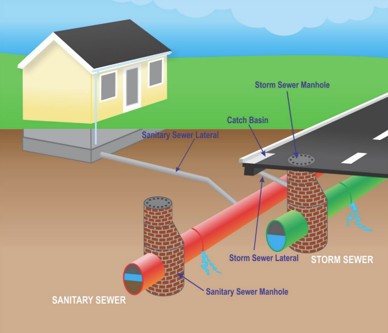
The sanitary sewer system is a network of underground pipes that carries wastewater from homes and businesses to a treatment facility. Wastewater includes water from toilets, sinks, showers, washing machines, and dishwashers.
In Hilliard, wastewater flows through sanitary sewer pipes to a regional wastewater treatment plant in Columbus. Once treated, the water is safely released back into the environment.
The City maintains the public sanitary sewer system, which includes the main sanitary sewer lines that run through neighborhoods and along roadways. These pipes collect wastewater from multiple properties and carry it through the system.
The City regularly inspects and maintains public sanitary sewer lines to help prevent blockages, backups, and overflows.
Sanitary sewer laterals—the pipes that connect homes and businesses to the public system—are privately owned and are the responsibility of property owners.
Hilliard also has a separate stormwater drainage system.
While sanitary sewers carry wastewater to a treatment facility, the stormwater system carries rainwater and melted snow away from streets, yards, and buildings.
Stormwater enters the storm sewer system through curb inlets, catch basins, and drainage ditches, then flows through underground pipes and detention basins before eventually discharging into local waterways. In 2003, regulations from the Ohio Environmental Protection Agency (Ohio EPA) were updated to require the removal of pollutants from stormwater before it enters waterways. As a result, storm sewer systems constructed in Hilliard since 2003 may include additional features such as stormwater quality basins or underground treatment systems designed to improve water quality.
Because the treatment of stormwater is limited, it is important that only rainwater enters the system. Materials like trash, oil, chemicals, pet waste, fertilizers, detergents, and yard waste can pollute local streams and rivers.
The City regularly inspects its basins that collect stormwater to ensure that they are functioning as designed for flood control and, where applicable, for water quality.
Keeping the sanitary sewer system and stormwater system separate helps protect public health and the environment. Additionally, keeping stormwater out of the sanitary sewer system ensures that the capacity of sanitary sewers is maintained.
For more than 20 years, the City of Hilliard has invested in maintaining and improving its sanitary sewer infrastructure through a process called targeted lining, also known as Cured-In-Place Pipe (CIPP).
This method allows crews to repair existing sewer pipes without digging them up. A flexible liner is inserted into the existing pipe and cured in place, creating a new, durable pipe within the old one.
Lining helps:
By repairing pipes from the inside, the process minimizes disruption to neighborhoods while protecting critical infrastructure.
During sanitary sewer lining work, contractors temporarily block an individual property’s sanitary lateral while the main sewer line is being lined. This process typically lasts 4–6 hours.
During this time, property owners should limit their use of the sanitary sewer system. Toilets and sinks may be used sparingly; however, activities that use large amounts of water—such as running washing machines or dishwashers—should be avoided, as they could lead to backups into basements or lower levels.
The City’s contractor will notify property owners in advance of any sewer lining work on their street so they can plan accordingly.
During heavy rain events, extra stormwater can sometimes enter sanitary sewer systems through cracks in pipes, loose joints, or improper connections. This is known as inflow and infiltration (I/I).
Examples include:
When too much water enters the sanitary sewer system, it can reduce system capacity and increase the risk of sewer backups or overflows.
To address this issue, the City inspects sewer infrastructure using cameras, dye testing, smoke testing, flow monitoring, and other tools to identify areas where stormwater may be entering the sanitary sewer system.
In 2022, the City initiated a backflow prevention program to help homeowners who have experienced repeated basement flooding events due to sanitary sewer back-ups caused by rain events. The program helps fund the cost of installing a backflow preventer in the basement floor or on the sanitary lateral. More information and the application can be found here.
Beginning in 2027, Hilliard plans to expand its sewer lining program to include private lateral pipes in targeted areas.
Private laterals are the pipes that connect homes and businesses to the City’s sanitary sewer main. While the City maintains the public sewer mains, property owners are responsible for the lateral pipe that runs from their building to the main line. To reduce the amount of infiltration into the City’s sanitary main, the City will pay for the costs associated with the lining of private laterals.
Studies show that a significant amount of rainwater and groundwater can enter the sanitary sewer system through cracks or leaks in private lateral pipes. When this extra water enters the system during rain events, it can reduce sewer main capacity and increase the risk of backups or overflows.
By lining these lateral pipes in targeted areas, the City can help:
Lining of private laterals will begin in Old Hilliard and in neighborhoods built prior to 1970, where older infrastructure is more susceptible to leaks and water intrusion.
Residents and businesses in these areas will receive additional information and advance notice if sewer lining work is planned in their neighborhood.


Hilliard is happening! Find out what’s going on with our weekly newsletter.